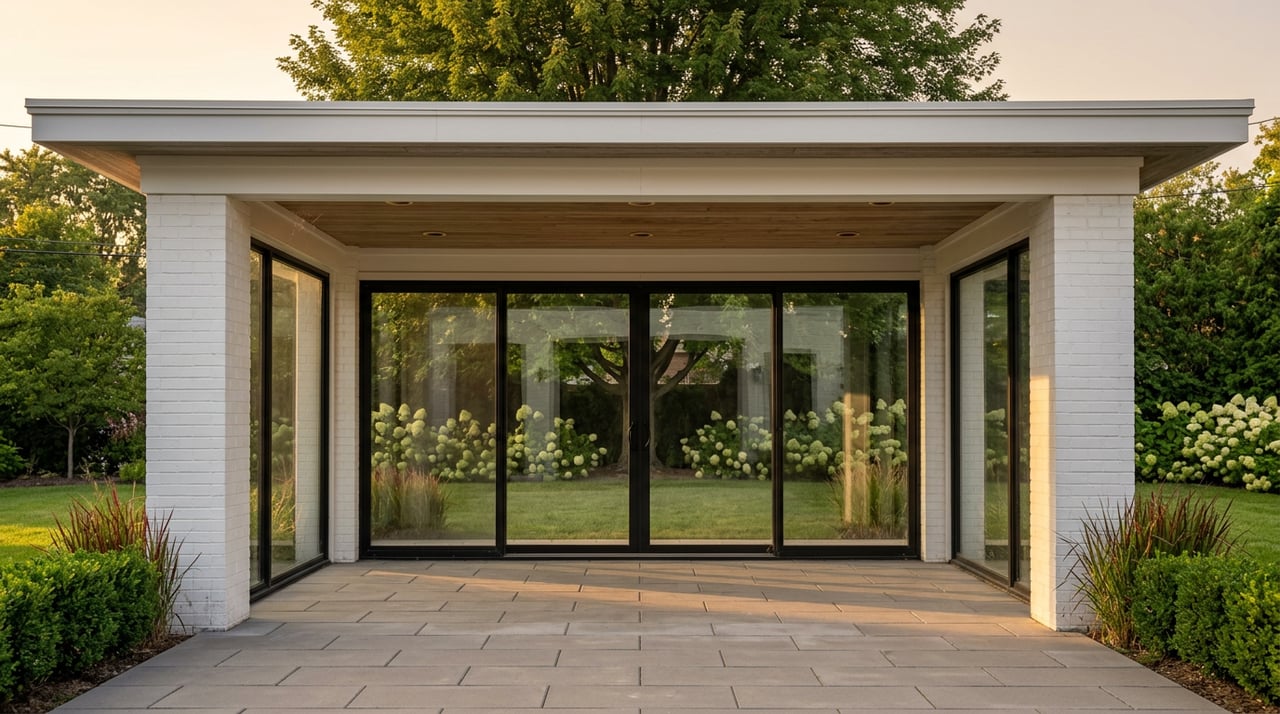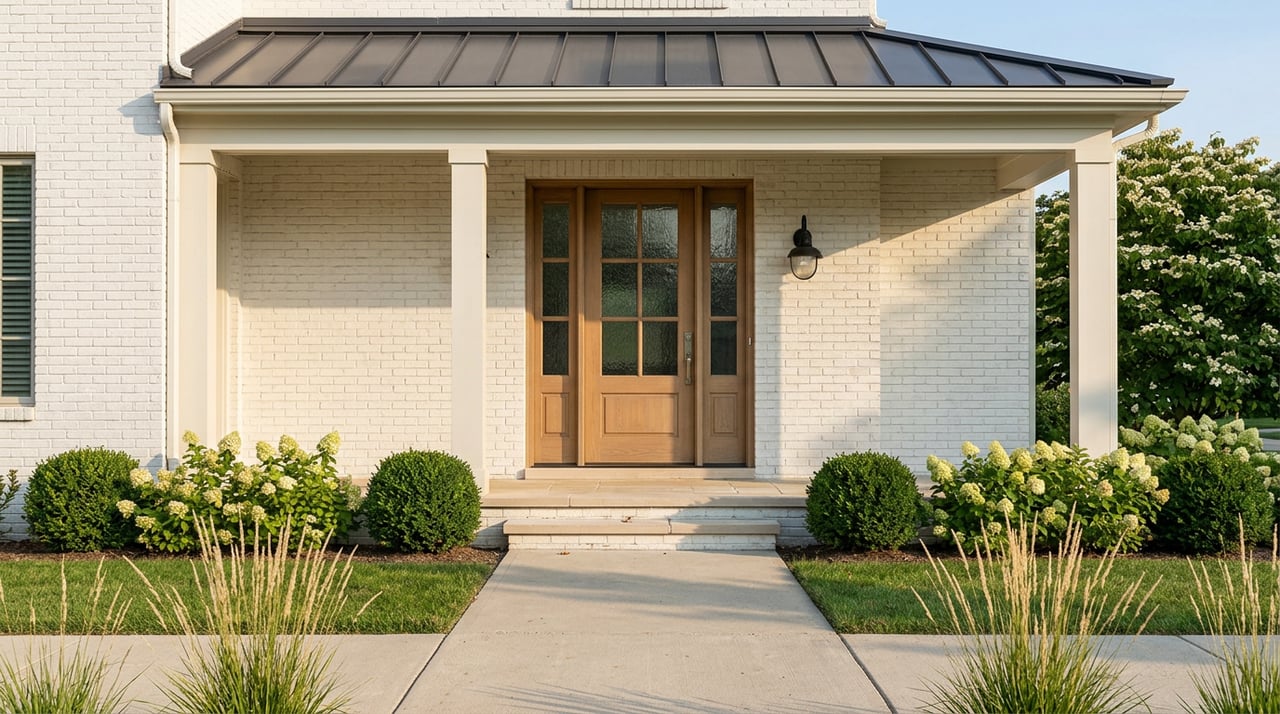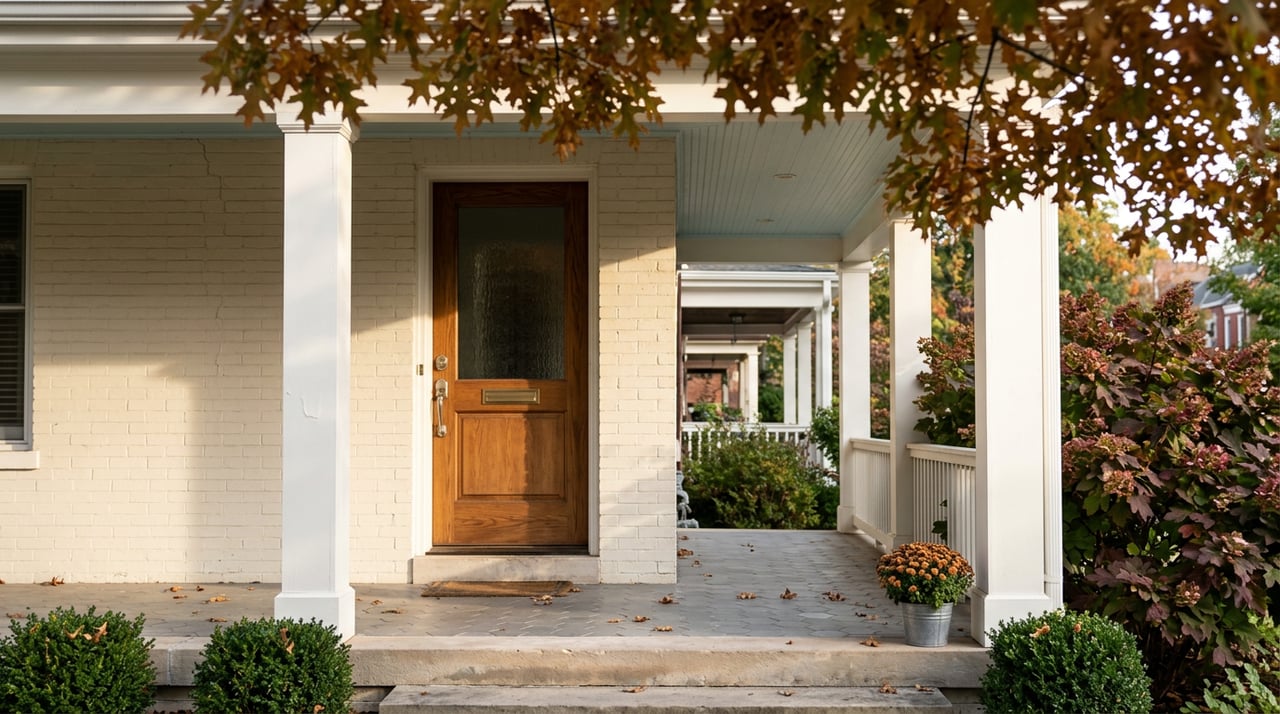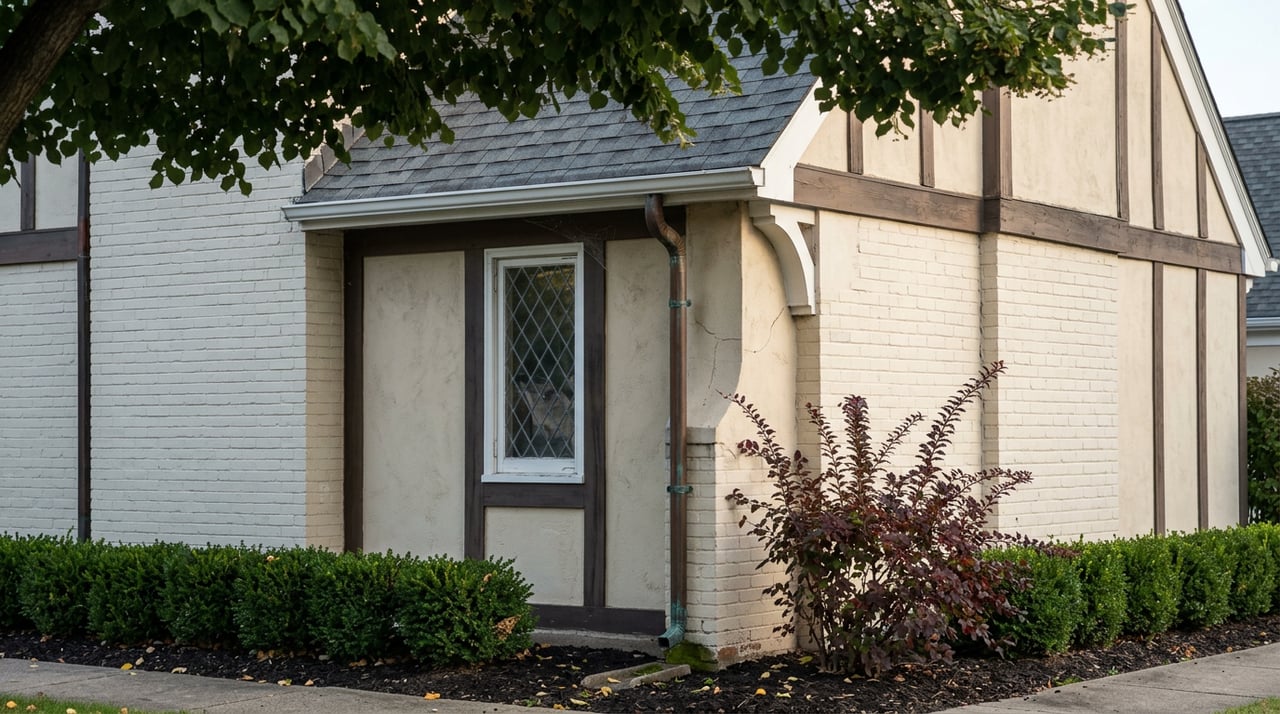
Picture two homes two blocks apart in Meridian-Kessler. Both are 1920s builds. Both have the deep porches, leaded glass, and mature oaks that make this stretch of Indianapolis feel like a period film set. One buyer wants to swap the front windows and repaint the trim a different shade of white. The other wants the same thing, one street over.
The first buyer needs an application on file and a spot on the Commission's monthly hearing calendar before a single sash comes out. The second can start Saturday morning. The difference has nothing to do with the age of either house. It has to do with which side of Meridian Street they're standing on.
"Historic" Is Doing a Lot of Work in That Listing Description
Meridian-Kessler's housing stock runs mostly early 20th century: American Foursquares south of 44th Street, bungalows east of College Avenue, larger period revivals to the west, with Colonial Revival and Tudor Revival mixed throughout. Three pockets within the neighborhood, Forest Hills, Oliver Johnson's Woods, and Washington Park, carry National Register of Historic Places designation. So does the stretch of Meridian Street between 40th Street and Kessler Boulevard, added to the Register in 1986.
Every listing agent knows to mention this. Far fewer explain what it actually means for a buyer's renovation plans, because it means two very different things depending on the address.
National Register status on its own is largely honorary. It documents architectural or cultural significance and can unlock certain preservation tax incentives, but it does not, by itself, require a homeowner to get anyone's permission before repainting a door or replacing a window. Forest Hills, Oliver Johnson's Woods, and Washington Park sit in this category. None of the three is documented as carrying the kind of locally administered, mandatory design-review board that governs the Meridian Street corridor.
Meridian Street itself is different, and the difference comes from a separate piece of state law entirely.
The One Legal Trigger That Actually Binds
In 1971, the Indiana legislature passed the Meridian Street Preservation Act, creating the Meridian Street Preservation Commission, a nine-member body with seven commissioners appointed by the Governor and two by the Mayor, chaired by a representative from the city's Department of Metropolitan Development. The Act requires any owner of property in the designated Primary or Secondary Preservation Areas along North Meridian Street to secure the Commission's approval for any land use change or zoning variance. Owners in the Primary Area face a stricter requirement still: no exterior construction, reconstruction, alteration, or demolition can begin without a Certificate of Appropriateness issued by the Commission first.
The Commission meets once a month, at 4 p.m. on the third Tuesday, at Meridian Street United Methodist Church. A granted Certificate of Appropriateness is valid for 18 months from issuance, which means a homeowner who gets approval and then delays a project has a real clock running before that approval expires.
Some things are exempt even for Meridian Street Primary Area owners: routine repair and maintenance that doesn't alter original materials, interior remodeling that doesn't change the property's use, planting or removing anything short of a healthy tree, and a handful of minor items like small surface-mounted vents or rear-entrance light fixtures not visible from the street.
Here's the comparison that most neighborhood guides skip entirely:
| Meridian Street (Primary Preservation Area) | Forest Hills, Oliver Johnson's Woods, Washington Park | |
|---|---|---|
| Governing authority | Meridian Street Preservation Commission (state statute, 1971) | National Register listing only |
| Exterior changes | Certificate of Appropriateness required before starting work | No mandatory design review |
| Approval timeline | Monthly hearings, 18-month validity once granted | Not applicable |
| Interior work | Generally exempt | Not applicable |
| Routine maintenance | Exempt if materials aren't altered | Not applicable |
Roughly 70 percent of homes along Meridian Street were built in the 1920s and 1930s, with the oldest dating to 1908 and the newest to 1996, so the Commission is reviewing everything from century-old wood windows to comparatively recent additions. A buyer who assumes the whole neighborhood plays by these rules will either budget for approval delays that never materialize, or worse, skip a step that was actually required.
What This Costs When the Work Actually Starts
Even outside the Preservation Area, Meridian-Kessler's age works against a fast, cheap renovation. Homes from this era commonly turn up cloth-insulated or knob-and-tube wiring during inspection, which can affect insurance eligibility and often triggers a licensed electrician's evaluation before a lender signs off. Pre-1978 construction means lead paint awareness matters for any project that disturbs old surfaces, and asbestos testing is worth budgeting for before opening up walls or removing flooring.
The restoration work itself carries its own price tag. One local restoration and repair contractor serving Meridian-Kessler since 2005 lists original double-hung window rebuilds, cord, weight, and pocket work included, at $225 to $395 per window. Horsehair plaster damage gets patched and skim-coated rather than fully re-lathed for most homeowners, since full plaster replacement is its own specialty trade and a different cost bracket entirely. Matching baseboard and casing profiles sometimes exist off the shelf and sometimes need to be shop-milled to match a house that predates standardized lumber sizes.
None of this changes based on whether a house sits in the Preservation Area. What changes is the paperwork wrapped around it. A buyer planning a full window replacement on Meridian Street proper needs to build the Commission's monthly hearing schedule into their timeline before they ever call a contractor. A buyer making the identical change two blocks away in Forest Hills does not.
Reading the Numbers With This in Mind
As of early August 2026, Meridian-Kessler's median list price sat at $384,950, up 2.65 percent from the prior month, with homes averaging 58 days on market. That's a snapshot of what's currently for sale, not what's closing.
Zoom out to the quarter ending March 2026, and the picture shifts: median sale price of $483,000, up 6.3 percent year over year, with price per square foot climbing 17.1 percent over the same period. Days on market in that window ran 54, up from 32 a year earlier. Trailing twelve-month figures, which smooth out both spikes, put the median sale price closer to $455,000, actually down slightly from the prior twelve months.
Three numbers, three different stories, and none of them contradict each other once you separate what each measures. The rolling twelve-month figure is dragged down by a slower stretch earlier in the cycle. The Q1 2026 window captures a market that had already reheated, with price per square foot outpacing the headline sale price, a sign that buyers are paying a premium specifically for square footage that's already been updated rather than square footage that still needs a licensed electrician and a plaster contractor. The current list price sits lower than either sale figure, which is normal in a market where sellers are still testing the top of the range before negotiating.
For a buyer weighing a fixer-upper against a recently renovated home at a similar address, that spread in price per square foot is the real signal. The renovation costs above aren't abstract. They're priced into the gap between what a dated house lists for and what a comparable updated one actually sells for.
Before You Write an Offer
- Confirm whether the specific address falls inside the Meridian Street Preservation Commission's Primary or Secondary Area before assuming any timeline for exterior work
- Ask whether previous owners obtained a Certificate of Appropriateness for any visible exterior changes, since unauthorized work can surface as a disclosure issue at resale
- Get a scope-specific bid, not a general estimate, for window, plaster, or electrical work once you know which set of rules applies
- Treat the current list price as a starting point for negotiation, not a finished comparison to the neighborhood's trailing twelve-month median
A Few Questions Worth Asking Directly
Does National Register listing by itself stop me from repainting or replacing windows? No. National Register designation on its own does not require design review. It's the separate, locally administered preservation commission structure, which in this neighborhood applies specifically to the Meridian Street corridor, that creates a mandatory approval step.
If I'm not on Meridian Street, do I need any approval for exterior work? Not from the Meridian Street Preservation Commission. Forest Hills, Oliver Johnson's Woods, and Washington Park carry National Register recognition without that same binding review structure, though any homeowner should still confirm their specific address and check for standard city permit requirements that apply regardless of historic status.
What happens if a Meridian Street home had exterior work done without a Certificate of Appropriateness? That's exactly the kind of detail worth surfacing before closing, since it can affect both the property's history of compliance and a buyer's own plans for future changes.
Meridian-Kessler rewards buyers and sellers who do their homework on which rules actually apply to a specific address, not just which ones apply somewhere in the neighborhood. Getting that distinction right before you write an offer, price a listing, or start planning a renovation saves real time and real money.
If you're weighing a Meridian-Kessler purchase or getting a historic home ready to list, Hundley Residential works this neighborhood block by block, with the design and staging expertise to plan renovations around what each address actually requires. Start Your Move with Hundley Residential.